 Image 1 of 5
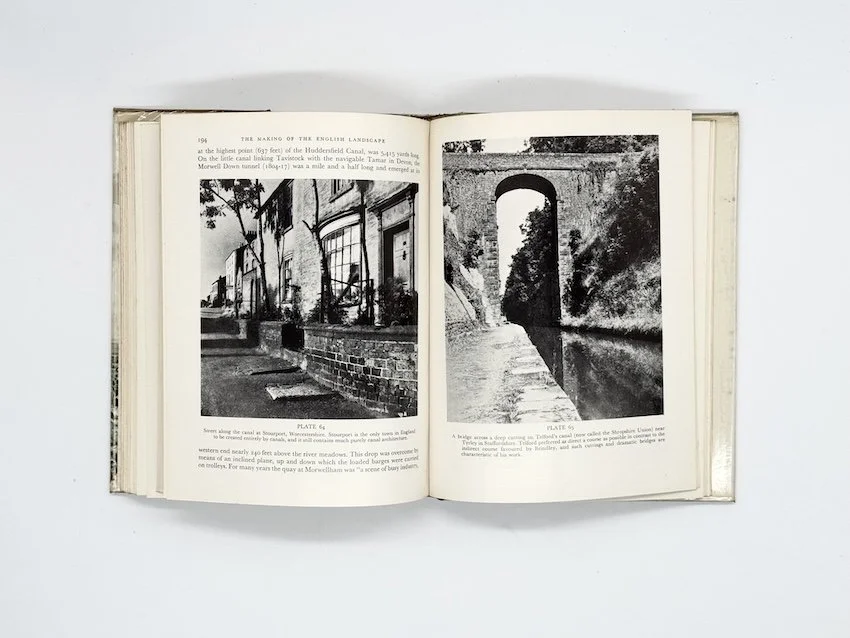 Image 2 of 5
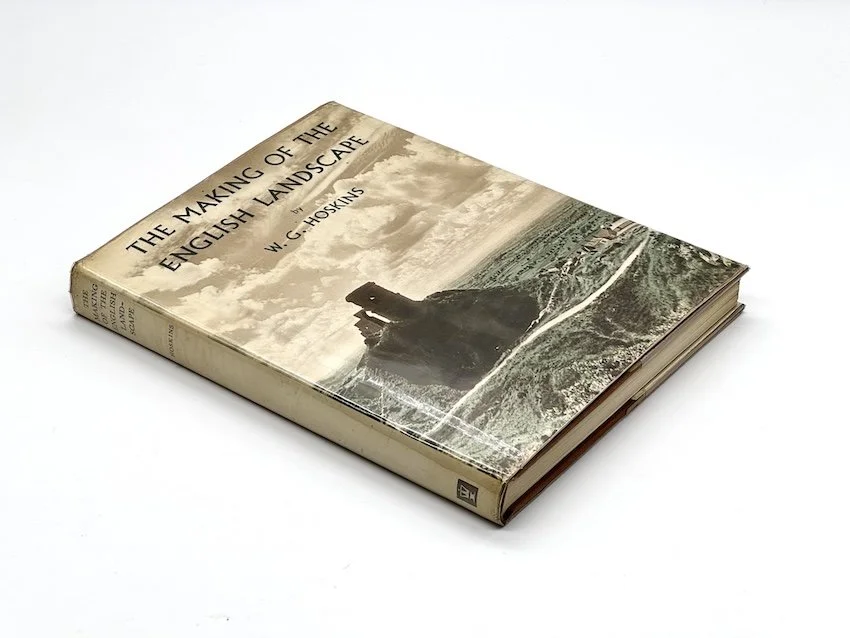 Image 3 of 5
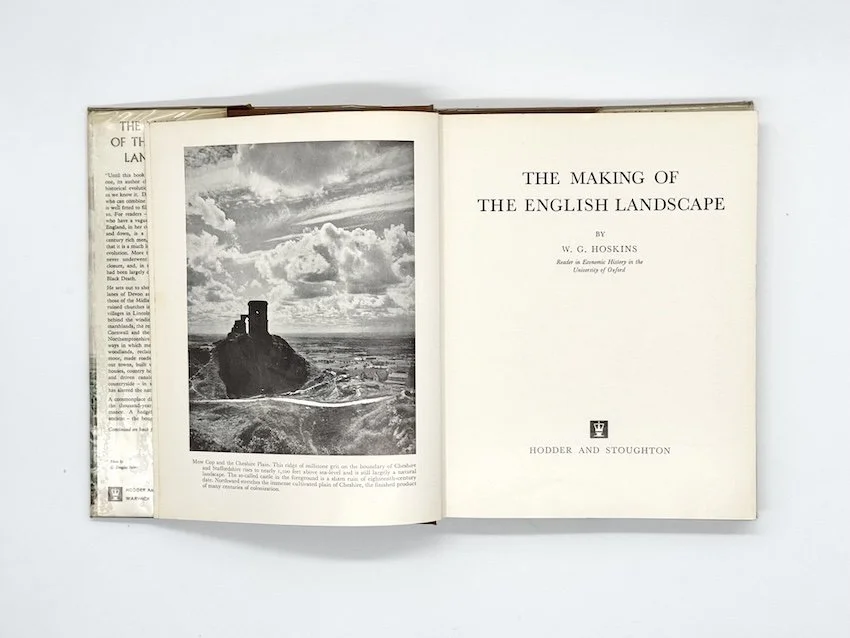 Image 4 of 5
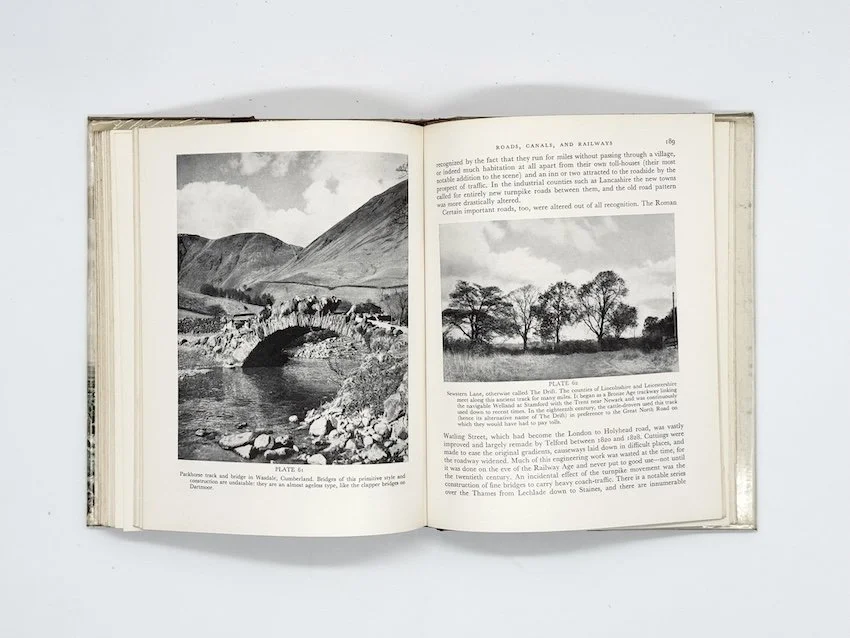 Image 5 of 5
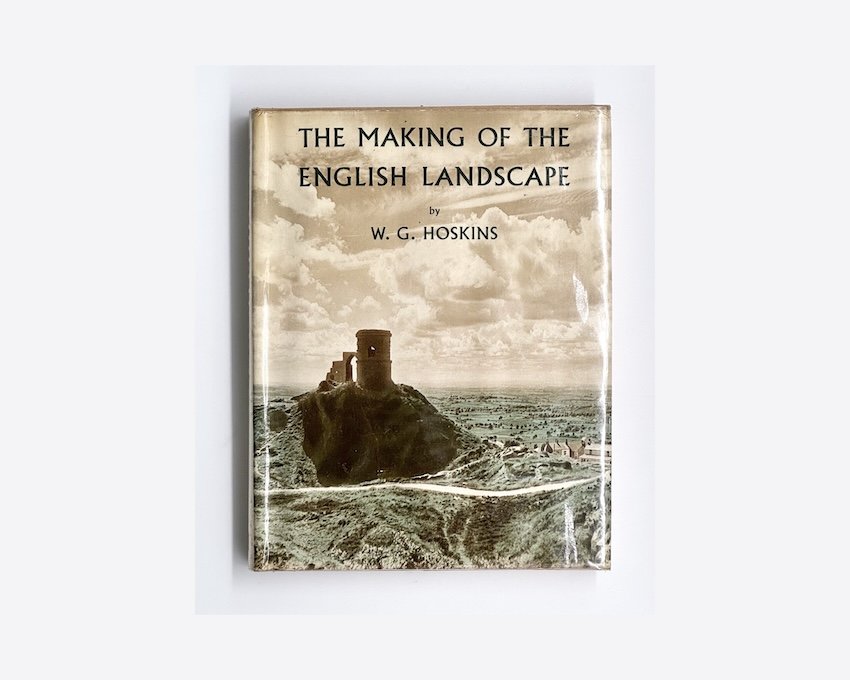
Title: The Making of The English Landscape
Author: W.G. Hoskins
Publisher: . Hodder and Stoughton, London
Publication Date: 1967 seventh impression (first published in 1955)
Format: hardcover with dust jacket
Images: illustrated in b/w
Pages: 240 pp.
Language: English
Condition: very good. With ownership inscription of Allan Hart
Provenance: The library of British landscape designer, Allan Hart, A.L.I., M.I.Hort., Dip.Ld.(UCL), Dip.IPRA
Stock Number: RB05249 AH
"Until this book was written, there was not one, its author claims, which dealt with the historical evolution of the English landscape as we know it. Dr Hoskins, as an Oxford don who can combine scholarship with readability, is well fitted to fill this gap - and he has done so. For readers - and there will be many - who have a vague idea that the loveliness of England, in her cultivated parts and off moor and down, is a creation of the eighteenth-century rich men, will find from Dr Hoskins that it is a much longer and more fascinating evolution. More than half England, he says, never underwent the familiar kind of en-closure, and, in some places, the landscape had been largely completed by the eve of the Black Death. He sets out to show why the hedgebanks and lanes of Devon are so totally different from those of the Midlands, why there are so many ruined churches in Norfolk and so many lost villages in Lincolnshire and what history lies behind the winding ditches of the Somerset marshlands, the remote granite farmsteads of Cornwall and the lonely pastures of upland Northamptonshire. He is concerned with the ways in which men have cleared the natural woodlands, reclaimed marshlands, fen and moor, made roads, lanes, and footpaths, laid out towns, built villages, hamlets, and farm houses, country houses and parks, dug mines and driven canals and railways across the countryside - in short, with everything that has altered the natural landscape.” (Publisher’s text)
“The Making of the English Landscape is a 1954 book by the English local historian William George Hoskins. The book is also the introductory volume in a series of the same name which deals with the English Landscape county by county. It is illustrated with 82 monochrome plates, mostly photographs by Hoskins himself, and 17 maps or plans. It has appeared in at least 35 editions and reprints in English and other languages. The book is a landscape history of England and a seminal text in that discipline and in local history. The brief history of some one thousand years is widely used in local and environmental history courses. Hoskins defines the theme of the book in the first chapter, arguing that a landscape historian needs to use botany, physical geography and natural history as well as historical knowledge to interpret any given scene fully. The remaining chapters describe how the English landscape was formed from the Anglo-Saxon period onwards, starting c.450 AD, and looking in detail at the mediaeval landscape, the depopulation following the Black Death, the Tudor period through to the splendour of the Georgian period, the parliamentary enclosures that affected much of the English midlands, the Industrial Revolution, the development of road, canal, and railway transport networks, and finally the growth of towns from Norman times onwards. There is little mention of cities. The concluding chapter, however, laments the damage done to the English countryside by "the villainous requirements of the new age"[3] such as military airfields and arterial roads, describes the new England as barbaric, and invites the reader to contemplate the past. The work has been widely admired, but also described as grandly emotive, populist, and openly anti-modernist. Writers have praised the book for helping them understand and interpret the landscape in which they lived.” (Wikipedia)
Title: The Making of The English Landscape
Author: W.G. Hoskins
Publisher: . Hodder and Stoughton, London
Publication Date: 1967 seventh impression (first published in 1955)
Format: hardcover with dust jacket
Images: illustrated in b/w
Pages: 240 pp.
Language: English
Condition: very good. With ownership inscription of Allan Hart
Provenance: The library of British landscape designer, Allan Hart, A.L.I., M.I.Hort., Dip.Ld.(UCL), Dip.IPRA
Stock Number: RB05249 AH
"Until this book was written, there was not one, its author claims, which dealt with the historical evolution of the English landscape as we know it. Dr Hoskins, as an Oxford don who can combine scholarship with readability, is well fitted to fill this gap - and he has done so. For readers - and there will be many - who have a vague idea that the loveliness of England, in her cultivated parts and off moor and down, is a creation of the eighteenth-century rich men, will find from Dr Hoskins that it is a much longer and more fascinating evolution. More than half England, he says, never underwent the familiar kind of en-closure, and, in some places, the landscape had been largely completed by the eve of the Black Death. He sets out to show why the hedgebanks and lanes of Devon are so totally different from those of the Midlands, why there are so many ruined churches in Norfolk and so many lost villages in Lincolnshire and what history lies behind the winding ditches of the Somerset marshlands, the remote granite farmsteads of Cornwall and the lonely pastures of upland Northamptonshire. He is concerned with the ways in which men have cleared the natural woodlands, reclaimed marshlands, fen and moor, made roads, lanes, and footpaths, laid out towns, built villages, hamlets, and farm houses, country houses and parks, dug mines and driven canals and railways across the countryside - in short, with everything that has altered the natural landscape.” (Publisher’s text)
“The Making of the English Landscape is a 1954 book by the English local historian William George Hoskins. The book is also the introductory volume in a series of the same name which deals with the English Landscape county by county. It is illustrated with 82 monochrome plates, mostly photographs by Hoskins himself, and 17 maps or plans. It has appeared in at least 35 editions and reprints in English and other languages. The book is a landscape history of England and a seminal text in that discipline and in local history. The brief history of some one thousand years is widely used in local and environmental history courses. Hoskins defines the theme of the book in the first chapter, arguing that a landscape historian needs to use botany, physical geography and natural history as well as historical knowledge to interpret any given scene fully. The remaining chapters describe how the English landscape was formed from the Anglo-Saxon period onwards, starting c.450 AD, and looking in detail at the mediaeval landscape, the depopulation following the Black Death, the Tudor period through to the splendour of the Georgian period, the parliamentary enclosures that affected much of the English midlands, the Industrial Revolution, the development of road, canal, and railway transport networks, and finally the growth of towns from Norman times onwards. There is little mention of cities. The concluding chapter, however, laments the damage done to the English countryside by "the villainous requirements of the new age"[3] such as military airfields and arterial roads, describes the new England as barbaric, and invites the reader to contemplate the past. The work has been widely admired, but also described as grandly emotive, populist, and openly anti-modernist. Writers have praised the book for helping them understand and interpret the landscape in which they lived.” (Wikipedia)